The Prophet Elijah and an Unforgettable Panigiri
What shook me – and why it wasn’t the earthquake.
Three things shook me on Crete this year: the trip to Rodopos, the panigiri for the Feast of Prophet Elijah, and a 5.3 earthquake.
The first two shocks were clearly the work of Crete and Sołtysowa. As for the third one… research is ongoing, and scientists remain divided: seismic activity or Sołtysowa.
Today it’s about the panigiri, with a personal thread running through it, so: “tread softly because you tread on my dreams.”
I’ve always said that Crete is its people. The beaches are beautiful, the mountains majestic, the frescoes full of colour, but without people, without the experience of community, all that becomes nothing more than a vanity fair. I had no idea that the hill I already knew hosted a panigiri. I was simply lucky enough to take part. Walking up there on my own would have taken me three hours – at least that’s how I remember the previous attempts. This time, thanks to Bandziorek, we made it much faster. And the views on the way… breathtaking. The landscape is so stunning you almost feel guilty for blinking.
I had no idea what awaited me. I had been to panigiria before, more than once, but never one that required climbing. All I knew was that this wouldn’t be a tourist event, but rather a gathering of locals, intimate and unpolished. I didn’t know how I’d be received, whether I’d accidentally commit some faux pas. Slightly anxious, slightly hopeful, I rode in the back of Bandziorek’s truck, staring at scenery changing like a kaleidoscope.
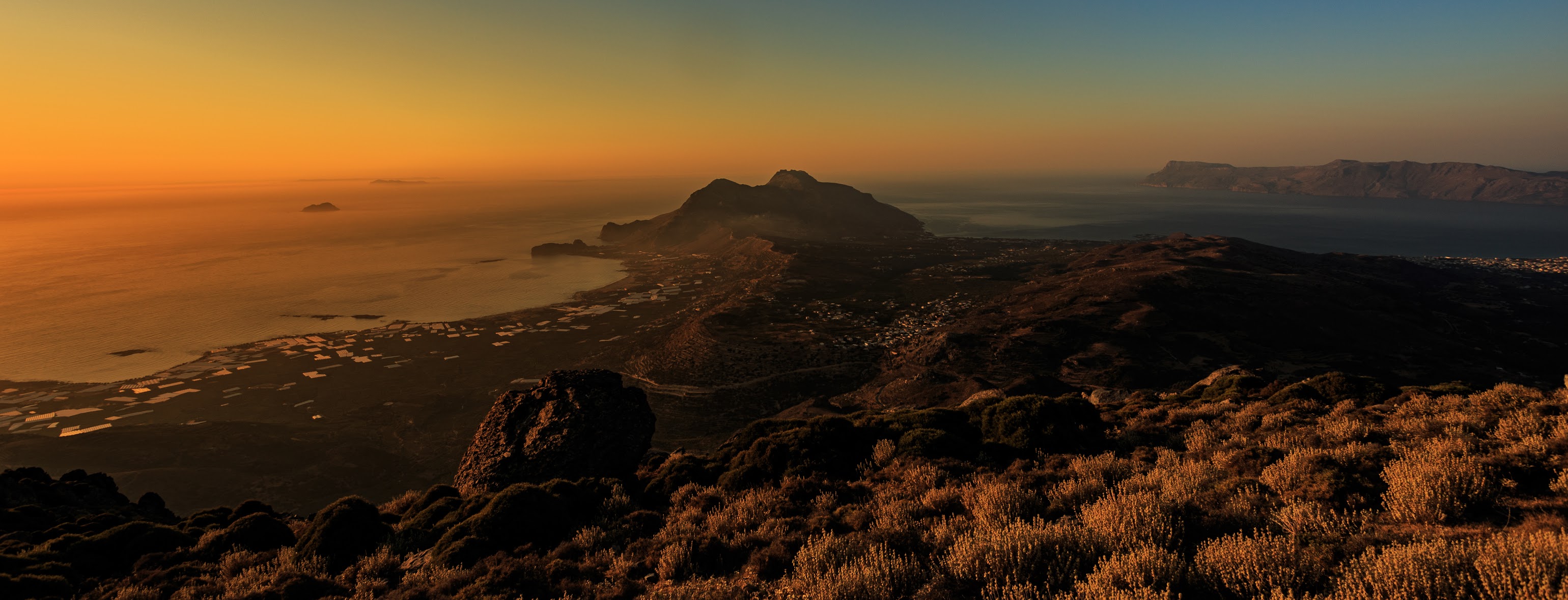
The last hundred vertical meters must be done on foot, along a narrow path, though not a difficult one. That final effort is rewarded with the mountaintop – and that’s where the true spectacle begins. The entire Gramvousa peninsula, Falassarna, Platanos, Kastelli – all within reach, bathed in the warm light of the setting sun. It was worth it. Even if I had to carry Bandziorek on my back all the way up, it would have been worth it.
What I feared – how I’d be received, whether I’d be intruding on someone’s intimate space – turned out to be nonsense. The non-verbal message was unmistakable: “you came here with us, you share this moment with us, you eat from the same bowl – you’re one of us.” It was an extraordinary experience. Something I’ve always valued more than any panoramas. People are the essence of this island, and I won’t change my mind. Without them, without that spark of Cretan-ness, without their unforced kindness, the island would be nothing.
I also know that despite all this affection, I will always remain an outsider. I don’t share their everyday struggles, their worries, their poverty. I will never fully understand life on Crete and everything that comes with it. All I can do is avoid being an annoying intruder, show some empathy and common sense when stepping – as a two-week tourist – into their reality. Each year I feel like I see more, that I begin to understand – and then comes the revelation that I still understand nothing. My perception has evolved from joyful cluelessness to quiet contemplation. From carefree delight to attempting to grasp what hides behind those smiles and that hospitality. To peek behind the curtain where the true Cretan soul resides. Today, I no longer see everything through rose-tinted glasses; more in shades of grey. Today I understand the lovely Cretan siga siga not just as a life philosophy – a slow-motion carpe diem – but also as something with a darker side: poverty, old age, abandonment, loneliness, resignation. It reminds me somewhat of Švejk, who covered the tragedy of his situation with humour, irony, and gentle absurdity. The more I see, the more I understand – and the more it hurts that we often don’t realise what lies beneath the surface.
And now I don’t know anymore whether I’m allowed to enjoy this, or whether I should simply feel sad. Whether I’m even entitled to be there. Whether I have the right to enter their lives, to expect any reaction. Whether my fascination justifies disturbing their everyday rhythm. Am I an irritating intruder, a spark of hope, or just a passing speck of dust that means nothing? I no longer know. Each year I’m dumber and more melancholic.
And they said travel broadens the mind!
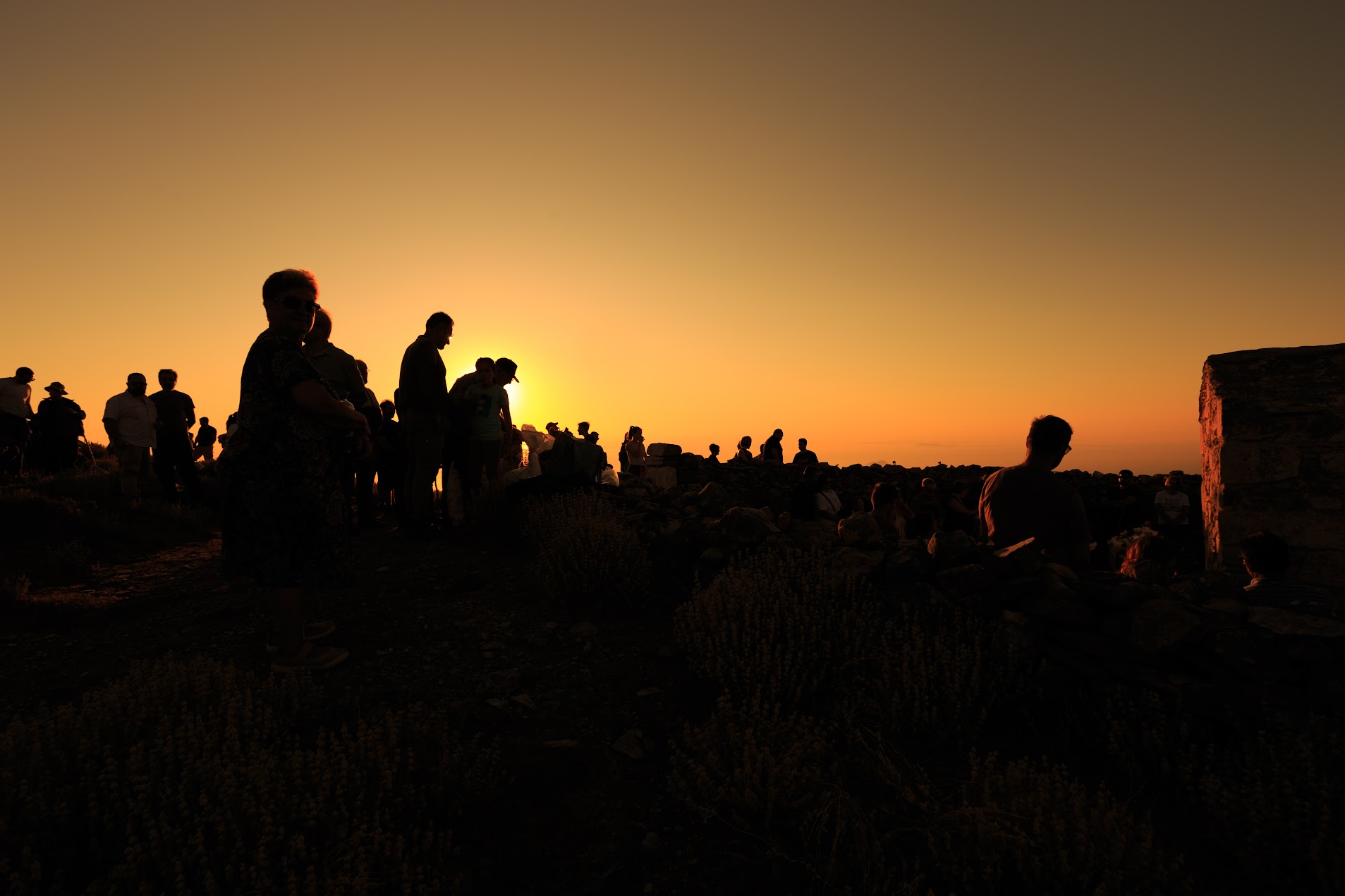
This panigiri was unlike any other. No music, a focus on simply being together in silence, sharing conversations and presence. I can’t help but see something of Elijah’s story here – which, of course, I will tell in a moment, because I’m unable to resist. A fantastic experience, one I will certainly want to repeat.
The institution of the panigiri is probably as old as Greece itself – and I don’t mean the modern republic. Its roots reach back to antiquity. Already in the late fifth and early fourth centuries BCE, perhaps earlier, the term panegyris referred to a gathering or festival in honour of a deity. These events combined prayer, processions, and feasting, not unlike today. In the New Testament, in the Letter to the Hebrews, the word «πανηγυρι» appears as a reference to a solemn religious assembly. During the Byzantine period, we encounter the panēgyreis, religious feasts mixed with what we might call a fair or a festival. Today, the tradition survives – not only on Crete.
And now, finally, Elijah. Those who know his story know it. Those who don’t – listen.
You’ll easily notice that churches dedicated to the Prophet Elijah are built on hilltops. It’s mostly a folk tradition, but it has roots in Elijah’s story. I won’t bore you with the entire narrative – though it is endlessly fascinating. Elijah is the only prophet who isn’t a monumental figure. He doubts, he collapses, he rebels – and yet, as the only one among the prophets, he is taken up to heaven in a fiery chariot.
So why the mountain? Because the defining moment in Elijah’s life was the journey to Mount