Churches, Eyes, and Alexis Zorbas
The Cretan mindset, or: Love me, darling – and later I’ll be your aunt again.
Let’s not beat around the bush: Kazantzakis’s novel is my personal bible. I adore it. It walks with me every time I wander around the island, and at this point I practically know it by heart. The film adaptation too – one of the finest translations of literature to cinema in every possible sense. In short, both the book and the film deliver. I can’t imagine the world without Alexis Zorbas; and if Kazantzakis hadn’t created him, someone would’ve had to. There’s nostalgia in this for me – I know perfectly well that the Crete of the novel no longer exists, and never will again. The island has lost some of its old qualities forever. And that’s beautiful, in its own bittersweet way. You accept it – and you take from the island what’s best. Take it with both hands. I certainly do. And Alexis? He’s still somewhere around me. Sometimes he disappears to Kastéllion to buy ropes and hooks, but he always returns. Always.
How many of the things described so brilliantly in Zorba’s story did I also experience myself? How many times did I sit staring at the sea or some other absurdly beautiful landscape, pondering the labyrinths of human nature? How many times did I stand inside old churches where time stopped centuries ago? How much wine have I drunk (not to mention the harder stuff), how many people have I met, how many nights have I talked my throat dry? You’ve had this too, haven’t you? Haven’t you? Some of my own moments can be summed up by this passage:
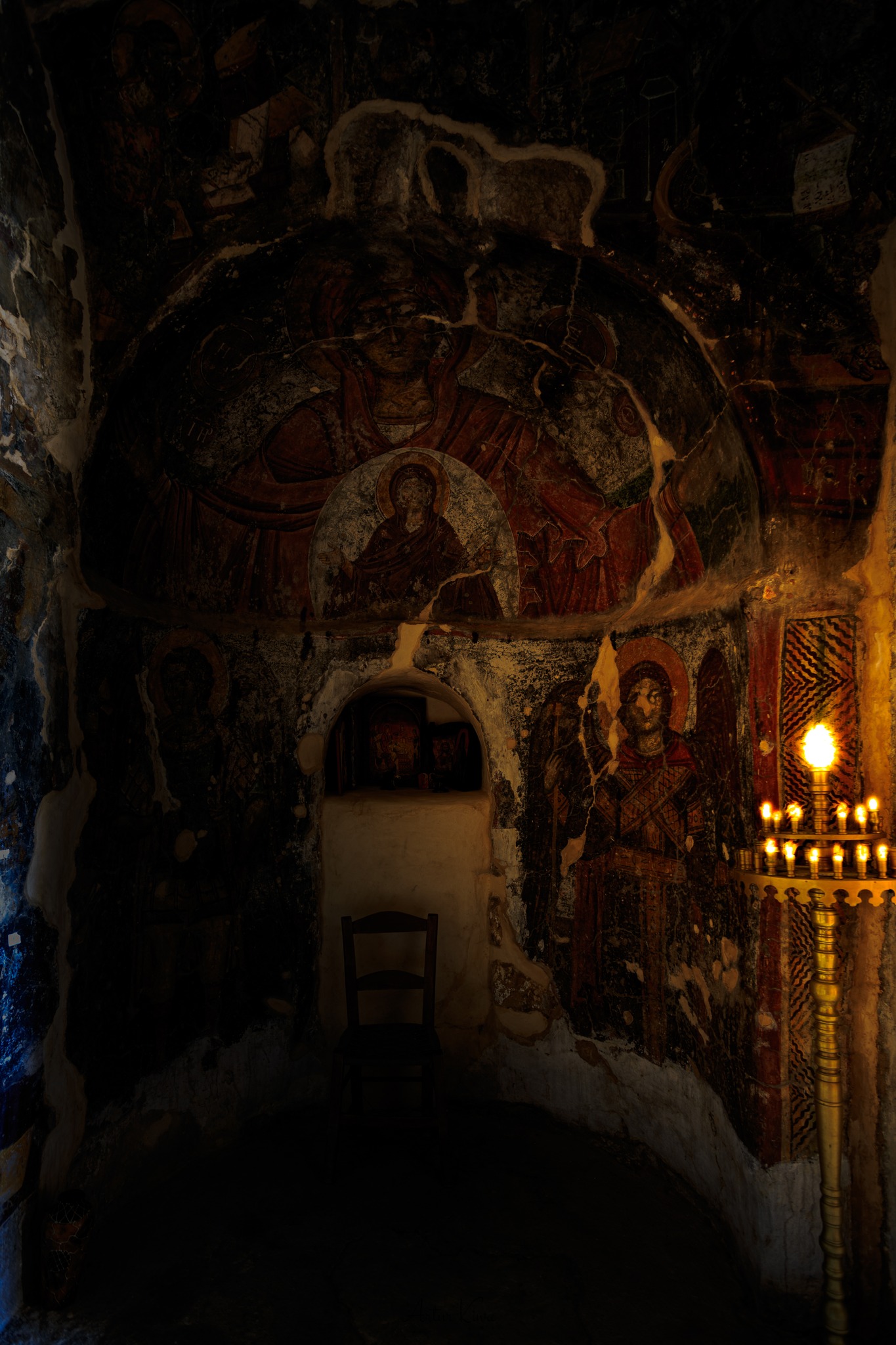
"The church was empty, the bronze candelabra cast a weak glow, and the carved panel separating the sanctuary filled the entire apse. With Benedictine patience the artist had etched into the gold a vineyard heavy with clusters of grapes. From floor to ceiling the walls were covered with half-erased frescoes. Terrifying figures of ascetics, gaunt as skeletons – Fathers of the Church, the Way of the Cross, stern, broad-shouldered angels with their hair tied by wide, faded ribbons...
High under the vault the Holy Mother appeared, rising with her arms spread in supplication. The trembling light of the lamp, hanging before her in old silver, fell softly and tenderly across her long, suffering face. I will never forget her painful eyes, her tight, rounded lips, and the prominent chin that spoke of her resolve. ‘Here,’ I thought, ‘is a mother infinitely happy, calm even in the greatest pain – because she knows her mortal womb bore an immortal being...’
When I left the church, the sun was already setting. Full of joy, I sat beneath an orange tree. The church dome glowed pink, as if at dawn. The monks rested in their cells."
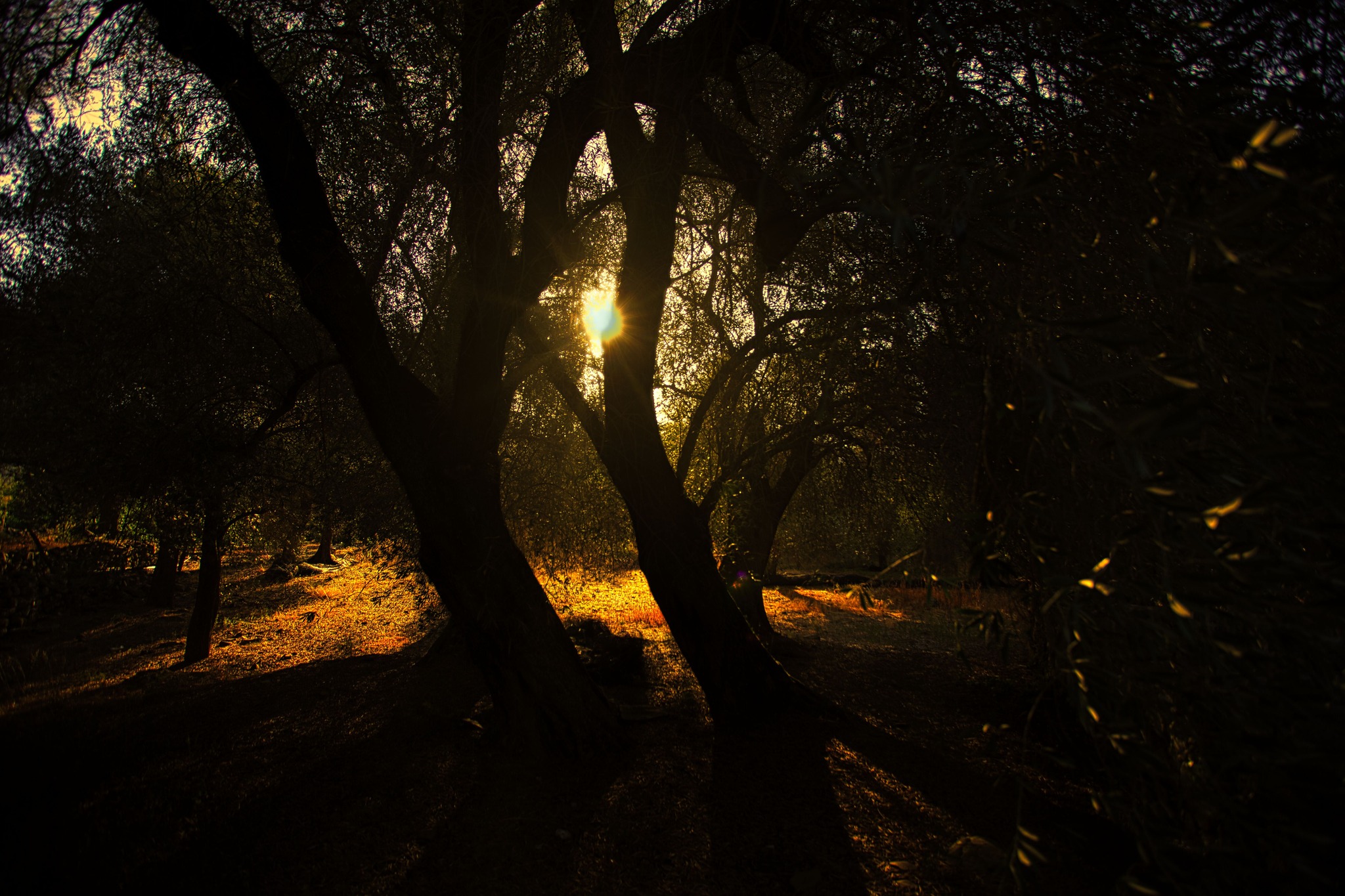
A classic case of what we call an obvious truth. The book is about the island – that much is clear. But there’s more to it: a sense of shared experience, of souls somehow connected through the way we feel, perceive, and taste my island.
But right – this was supposed to be about churches and eyes, not a hymn to Zorba. Eyes. Eyes matter in Greece, and especially on Crete. I’m not going to ramble about prophetic eye symbolism; that has been written to death. I want to focus on the eyes inside churches – specifically, in frescoes. Surprised? Yes, for a change, I’m talking about frescoes again, because I think they represent something rare and unexpected.
You may have noticed that very often the eyes – sometimes the entire faces – of saints in frescoes are damaged. Sometimes it’s just the pupil scratched out; sometimes the whole face is gouged away. This always intrigued me. Why so selectively? Why the face?
First association: the Turks, the Ottomans, the Muslim occupiers. A reasonable guess: Islam forbids human representation, and the face is the seat of personhood. Make the face unreadable and the problem is solved. Another explanation: the passage of time. But that doesn’t account for such targeted damage. It’s not as if fresco painters forgot how to plaster just the faces. Iconoclasm also played a role at times, but that usually meant destroying whole figures, not just the eyes.
Then comes the third explanation – the most fascinating and least obvious: superstition. Yes, my friends, superstition and the magical thinking deeply rooted in Cretan folk culture. A blend of Christianity with older, wilder beliefs. When I first learned about this third possibility, I couldn’t believe it. It knocked me off balance. But the story holds up.
The damage was sometimes inflicted by the Cretans themselves. People believed that plaster from frescoes had magical or divine properties. The saints, through their depiction, were thought to imbue the pigments with their virtues. The pigment became a kind of amulet. Sometimes even a medicine, especially for eye diseases and skin conditions. Pieces taken from frescoes depicting patron saints were used in fertility rituals or for ensuring a good harvest. Which made those particular saints – and the Mother of God – especially vulnerable.
Another fascinating layer: the belief in “living icons”. In folk imagination, the holy figures depicted on walls were practically alive. People believed the saints watched from the frescoes, observing daily life. The eyes, in particular, were seen as focal points of divine power. Damaging the eyes could “neutralize” that power – make the saint stop seeing someone’s sins or misdeeds.
And then the most surreal aspect: punishing the saints. Yes, it happened. Locals, suffering from disasters – epidemics, crop failures, child mortality – blamed their patron saints for “failing” to protect them. In these cases, scratching out faces or eyes was an act of revenge.
Finally, the question of the evil eye – vaskania. A deep-rooted Greek belief. Holy images, especially eyes, sometimes had a protective function. But sometimes, to dispel the influence of a “bad gaze”, people believed they had to literally destroy a gaze – by removing eyes from images.
It took me a while to dig through all of this. It’s a mesmerizing subject. I had long assumed the Turks were responsible – and here, once again, Crete surprises. As I always say: Crete isn’t a place, it’s a state of mind.
And that brings me back to Zorba. I can’t end without him, because he embodies that state of mind like no one else.
There’s a scene in the book that perfectly captures the Cretan worldview.
Zorbas had gone to town for supplies – and vanished for weeks, spending part of his boss’s money with a young woman named Lola. Now the men are negotiating with monks to buy a forest, and Alexis has his own twisted plan to settle both the debt and his conscience. He starts explaining:
“In Kastéllion I spent more than I should have. Because Lola cost me – that is, cost you – a good sum. You think I forgot? You think I have no pride? I don’t want a stain on my honor! I spent it, I repay it. I made a calculation: Lola cost me seven thousand, so I’ll make it back on the forest. The abbot will pay for Lola, the monastery will pay, the Holy Mother will pay. That’s my plan – how do you like it?”
— “Not at all. Why should the Holy Mother pay for your adventures?”
— “She’s responsible – absolutely! She gave birth to a son: God, and God created me: Zorba – and gave me what you know, and what I understand, and that makes me lose my head at the sight of a woman and open my wallet. Now you understand? The Holy Mother caused it – let her pay.”
— “I don’t like this at all, Zorba.”
— “That comes later, boss. First let’s get our seven thousand back, then we’ll talk. ‘Love me, darling – and later I’ll be your aunt again.’ You know that song?”
That way of seeing the world, of solving problems – I always envied Alexis for that.