Church of Saint George in Komitades (Sfakia)
The Church of Saint George in Komitades is a 14th-century sanctuary in the Sfakia region of Crete, known for its well-preserved frescoes painted by Ioannis Pagomenos and for a surviving foundation inscription dated to 1313–1314. Located far from main roads, in a stark mountain landscape, it stands as a valuable testimony to local piety, communal patronage, and the iconographic programme of the Venetian period.
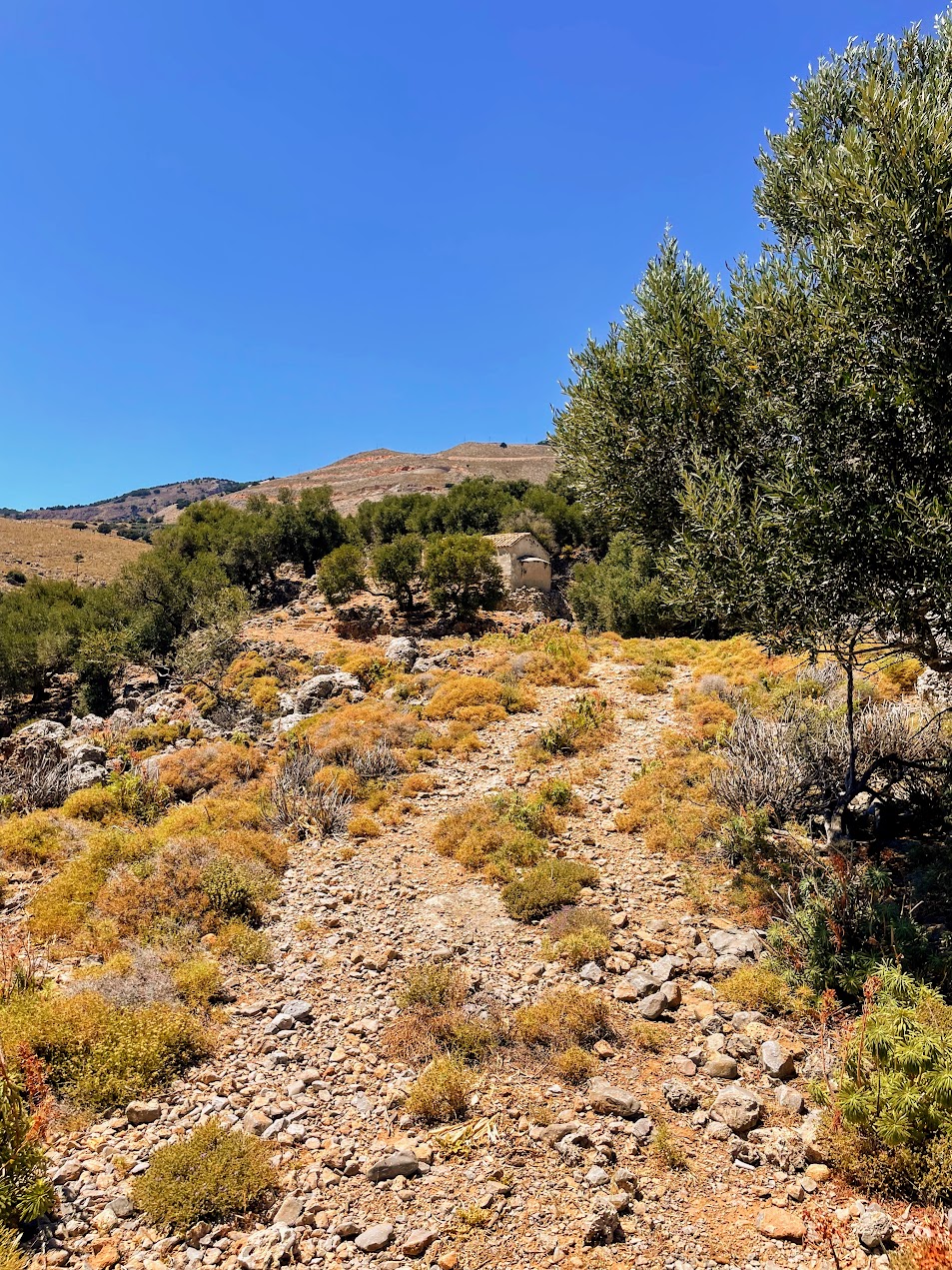
Another beautiful, historically important, and—contrary to what one might expect—well-documented church, located quite literally in the middle of nowhere. The journey itself is part of the story. Driving along one of the most beautiful roads in Crete, from Imbros towards Chora Sfakion, we turn left towards Komitades and head for a point marked by the coordinates 35.205934, 24.165785. This spot functions as a kind of gateway into a less civilised world—the road becomes unpaved, though still passable.
From there we continue for about 500 metres to a point near the church where it is both advisable and necessary to leave the car. Driving further in a standard vehicle is not a good idea: at best it will end in stress, at worst in damage to the undercarriage or wheels, not to mention the cost of towing. From this point on, the journey continues on foot. The distance is roughly 800–1000 metres, which in practice means a 20–30 minute walk one way.
The route is not particularly difficult and it is virtually impossible to get lost. The only real hazard is the dense network of beehives along the way. These should be avoided by a wide margin—bees defend their territory with conviction, which in my case resulted in several painful encounters with their stings. Weaving between the apiaries lengthens the walk, but the reward comes quickly. Along the way one passes a very interesting cave, which on a hot day becomes a true blessing—a moment of shade and relief, as walking in full sun can be exhausting.
The church itself surprises with its modesty. Small and unassuming, it is a typical Cretan single-nave church, originally equipped with a narthex that has since collapsed. It is clear that the vestibule was added later and did not withstand the passage of time. What matters most, however, has survived inside. The interior preserves 14th-century frescoes signed by the hand of Ioannis Pagomenos himself—one of the most important Cretan monumental painters of this period.
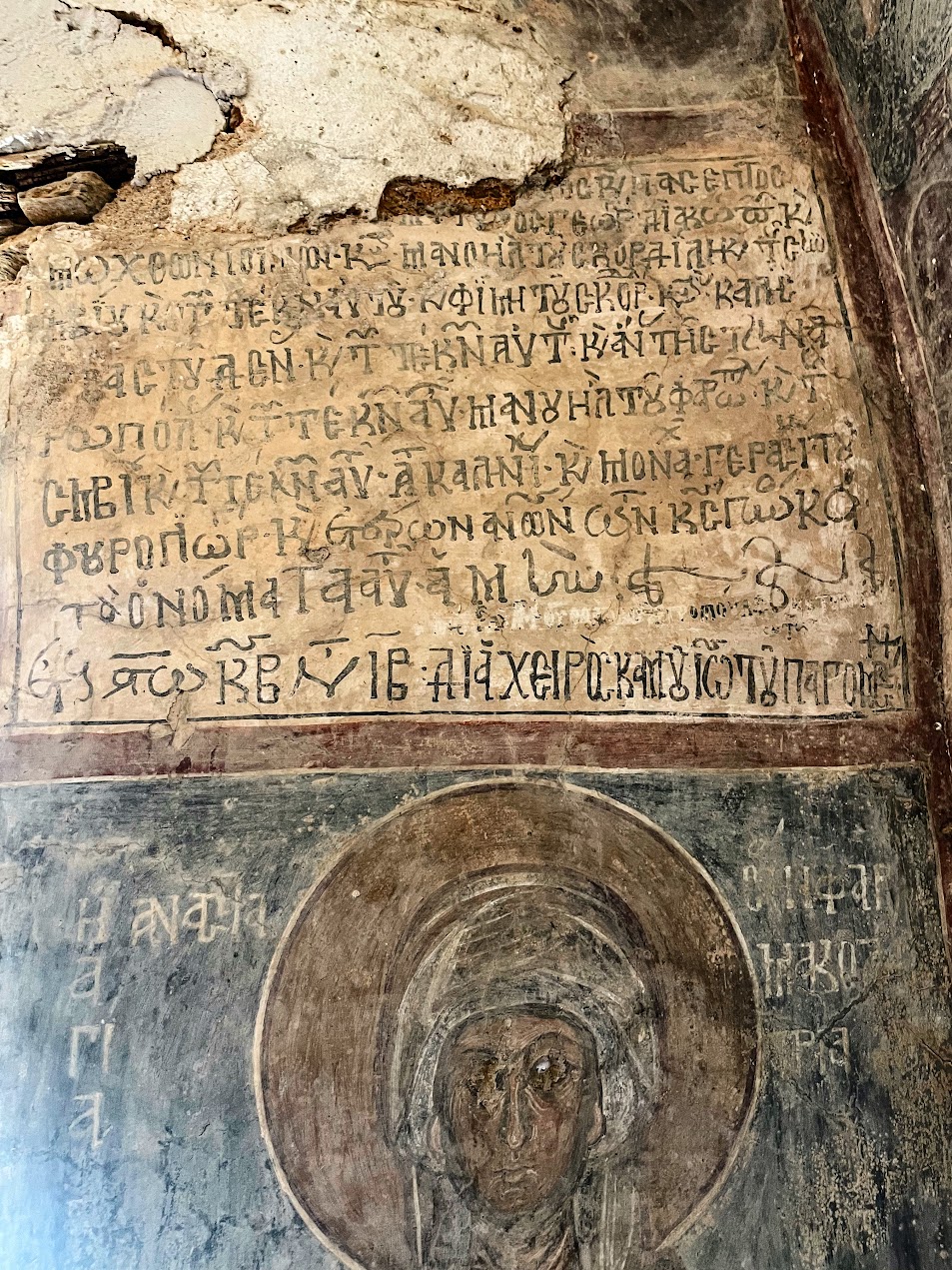
The preserved foundation inscription allows the painted decoration to be dated with great precision. It points to the year 1313/1314 and informs us that the frescoes were created through the combined effort of the founders and the local community as a whole. Importantly, the inscription is not terse: it names specific individuals, including Manuel Skordylis and Gerasimos Fourogiorgis, as well as others whose names—as the text states—“are known to the Lord.” This is a rare moment when a seemingly anonymous rural church begins to speak with a distinctly human voice.
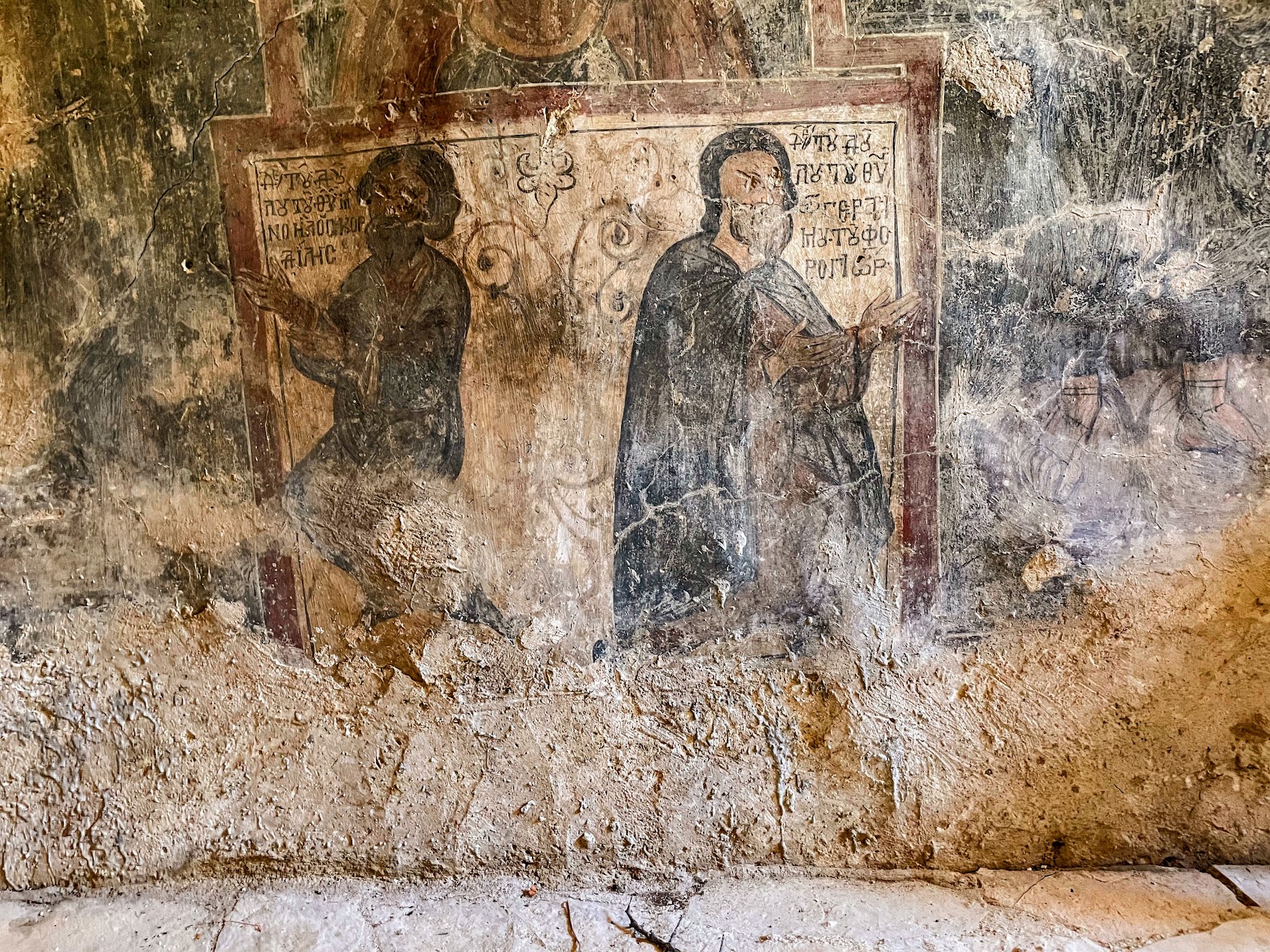
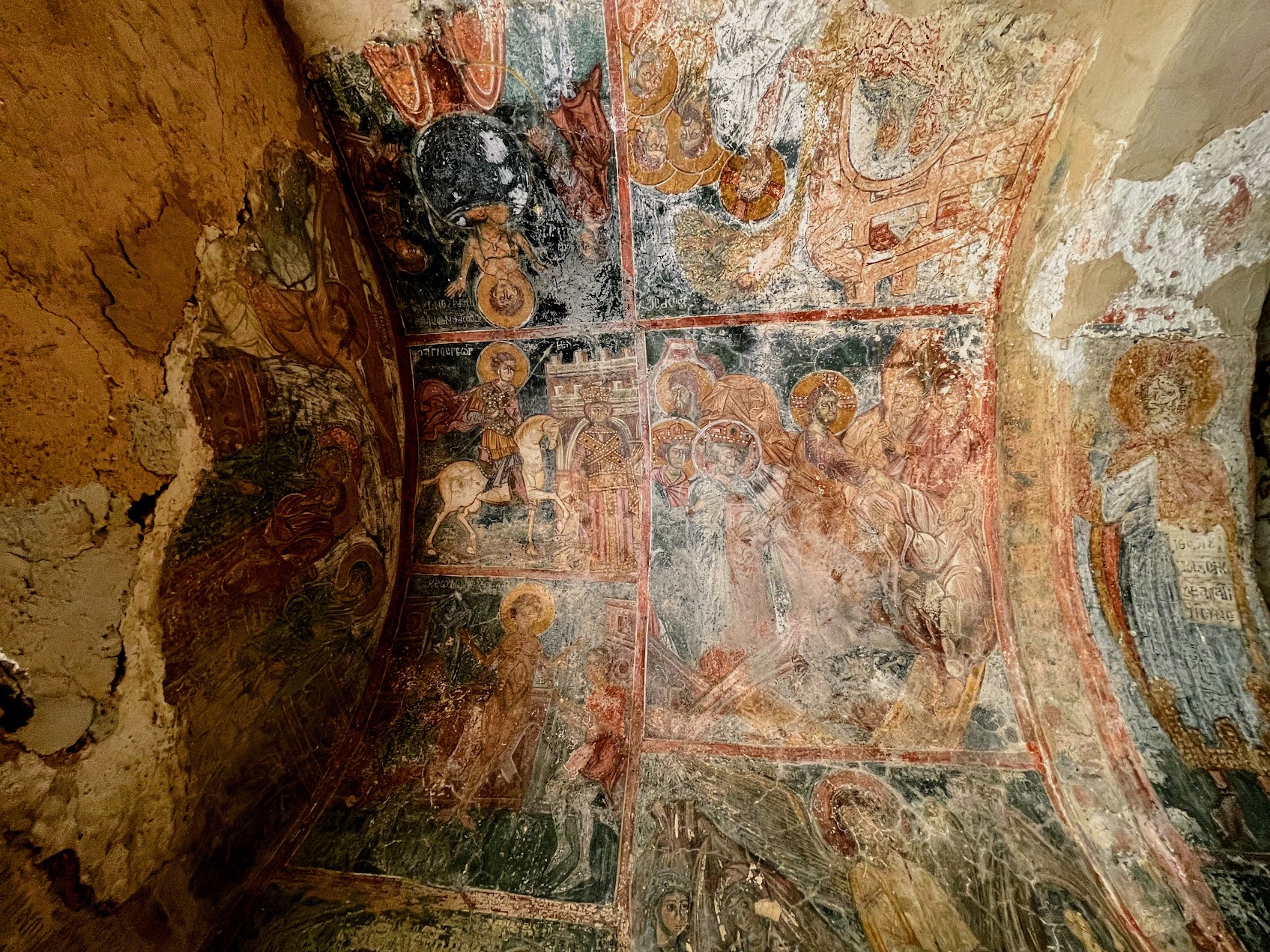
The iconographic programme consists primarily of scenes from the life of Saint George, as well as a classical Christological cycle. Particularly interesting is the presence of portraits of the founders among the frescoes. While this is not an exceptional phenomenon in Byzantine art, it always provides a valuable interpretative clue. These images remind us that the church was not an abstract theological construct, but a very concrete work of a community—of people who lived here, prayed here, and invested their resources and effort.
The foundation of the church is also linked to a legend still told by the inhabitants of Komitades. According to local tradition, the church was built as a votive offering in thanksgiving for divine assistance in repelling a pirate attack. It was here, so the story goes, that the inhabitants took refuge and prayed to Saint George. The attack was successfully repelled, and a church was erected on the site of their prayers.
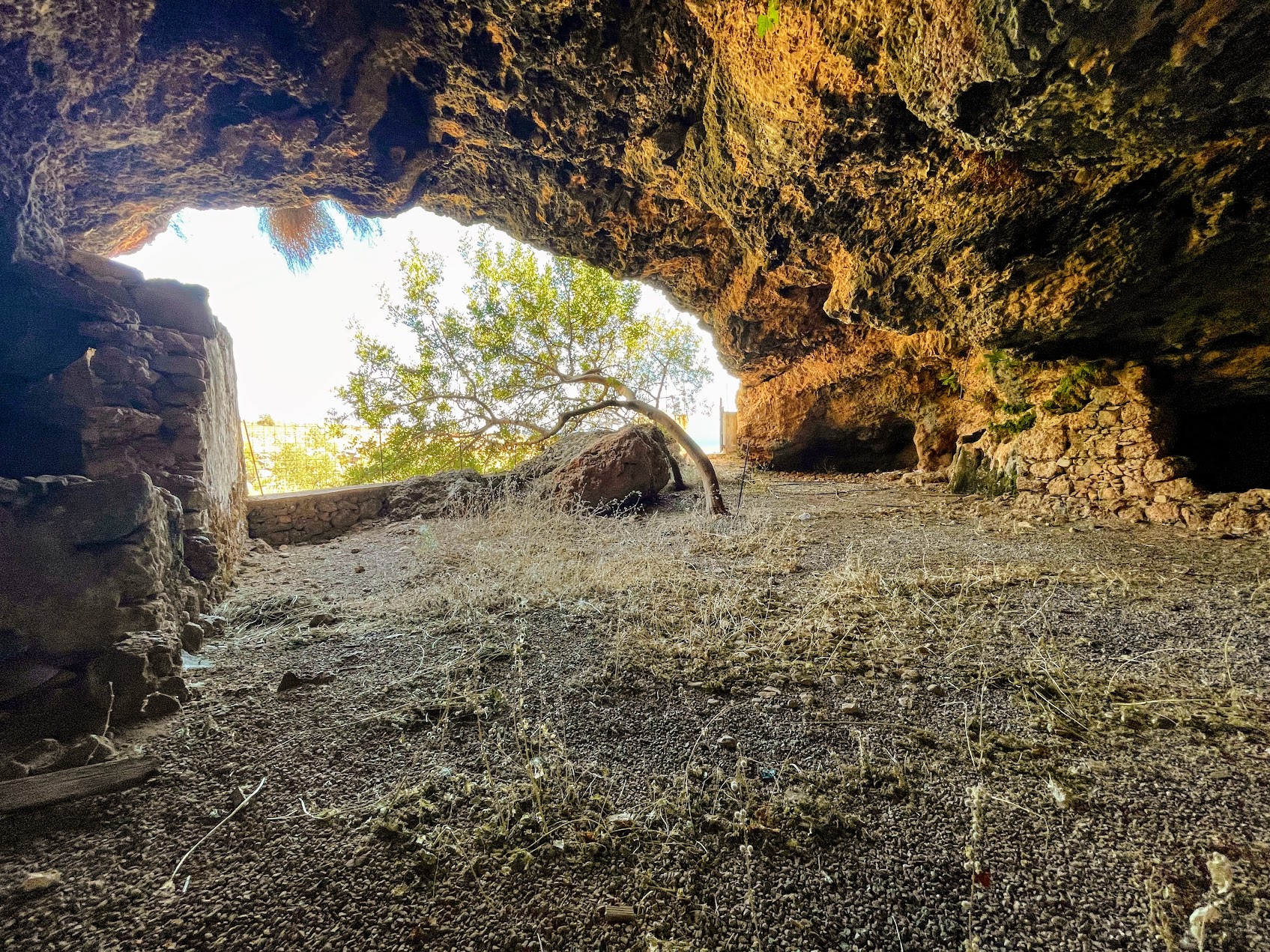
How much historical truth there is in this story remains unknown. It is one of many identity-forming narratives characteristic of Sfakia. Still, it is hard to deny its appeal. Moreover, the surroundings of the church are indeed rich in caves, rocky clefts, and natural formations that could have served as shelters or defensive positions. Perhaps there is a grain of truth hidden in this legend. And even if there is not, the story itself forms part of the cultural landscape of this place and is worth remembering.
The Church of Saint George in Komitades is neither easy to reach nor visually striking at first encounter. It demands effort, time, and patience—just as the frescoes described by the foundation inscription once demanded them. Perhaps that is precisely why this place resonates so strongly.
Here, art is not decoration but a trace of human labour; the icon is not an abstract symbol, but part of the life of the community that commissioned it and contemplated it for generations. In the silence of this place it becomes easy to understand that the churches of Sfakia were not built “by the road”—they were built where they were needed. And the memory of them, like the journey to Komitades itself, was never something obvious.