Crete in Darwinian Terms, or the Evolution of Attitude
What has changed over the years in how I see Crete.
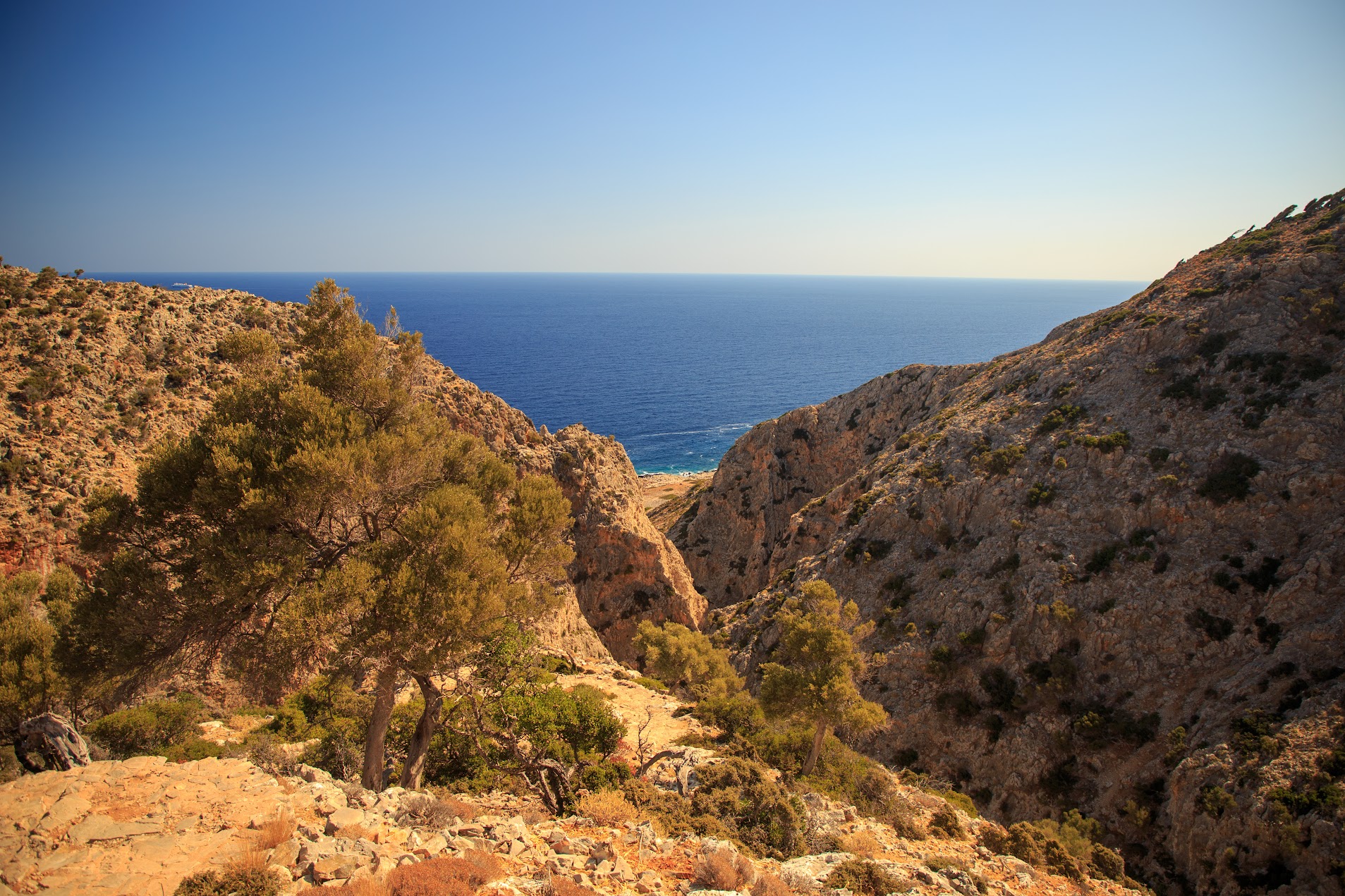
I’m not exactly a fan of short literary forms – you already know that – so brace yourselves for something a bit more demanding. This time it’s a text, for a change, about evolution. I’ve written before about the places I like and the ones I don’t, and it did no good to anyone involved: the Island, myself, or the readers. So, in the interest of public health and basic sanity, today’s piece will be Darwinian. And in case someone expected Lenin: a revolution differs from evolution the way a chair differs from an electric chair.
I don’t know where to begin. One should begin at the beginning, supposedly – but where is that beginning? Twenty-something years is enough time for both summary and evolution. It’s the moment when the young bull slowly transforms into the old bull, and not everything looks easy or simple anymore. Or, to put it otherwise: when the old bull sees a group of heifers down in the valley, he doesn’t charge toward them; he approaches at an orderly, dignified pace. There comes a moment when you feel on your back the cold breath of fate – still subtle, but unmistakable and deeply thought-provoking. You don’t need to turn around. You already know that what once felt abstract is now within arm’s reach, and it’s not a pleasant prospect. You know exactly how the story ends.
So I return, with my faulty memory, to those beginnings – to the moments that marked me like a stigma, to those first times that without a doubt shaped me into whatever form I am today. There’s no denying it: the Island has formed me as an adult human being. To live with this place for so many years has left a massive imprint. What some people today see in me – my siga siga approach to life and, at the same time, my fierce assertiveness when defending my own view – is a direct consequence of immersion in Cretan reality. It was there that I learned forgiveness, especially forgiveness of myself. It was there that I understood that people matter more than possessions. In other words: it is better to be than to have. People, family, friends, health – that’s what counts. Work, money, and the rest of that noisy vanity fair aren’t worth a penny.
The famous siga siga we love to quote – which on the Island can be a blessing or a curse – became far more than a word meaning “no rush”. Today, after all these years, it’s a whole philosophy of life, one I only now fully understand.
I remember that young tourist, the one I used to be, devouring kilometres of Cretan roads with madness in his eyes. Everything was fast, as long as it could be “checked off”. Often without thought, plan, or any reflection whatsoever. Over the years everything began to change. I don’t know if for better or worse, but the evolution is visible, and it went in a surprising direction. That’s evolution for you: you never know whether wings will grow or horns.
Where did that energetic young man go? The one who leapt out of bed before dawn while hotel tourists were still snoring softly, so he could drive a beat-up Corsa to catch the sunrise somewhere? Where is the incurable enthusiast who hiked the E4 with a torn tent, unfazed by spiders or scorpions, and who ran circles around the camp at night just to warm up? Those mad adventures, the falls, the blood, sweat and tears, the insane goats, sunrises and sunsets seen from places forgotten by God and man – all of it is fading into the shadows of memory. Details blur, dates tangle, everything melts into a single stream of consciousness.
After so many years the Island doesn’t make the same overwhelming impression it did the first time. I’m no longer a casual tourist. I’m at home. I have favourite places; I know where to get good coffee and chat with the owner – for the umpteenth time, by the way. The Island is like a second home you return to regularly to rest and recharge. One thing hasn’t changed: the fascination. It’s the same as twenty years ago, maybe stronger. The priorities and the style have changed, but the feelings remain the same. For years now I’ve stopped pretending I’m interested in going anywhere else. Here I still have so much to discover, and I keep finding new paths to explore, that I no longer have time for holidays in other places. Is it a pity? Am I limiting myself? Not really. I’ve seen enough of the world. I don’t miss the exotic. I’d rather explore old churches, decipher inscriptions on frescoes, and look for silence on mountain paths than join the pilgrimage of one-use tourists visiting global destinations by the millions.
I’ve found my place on Earth. I feel good here. I know the people. I know the customs. I know what to expect. It’s a mature kind of love – maybe no longer with butterflies in the stomach, but built on solid foundations. I don’t feel I’m missing out, because I am in a place that is utterly unique. A place where I can commune with history and nature in a way I cannot experience in most parts of the modern world.
And yet there is also a sense of happiness that I can still enjoy all of this; that I had the chance to meet people and share emotions with them. But there is also nostalgia for what has passed and will not return. For years now I’ve been acutely aware of time. The icy breath of my Nemesis is already clear and distinct, and I know it will catch me someday. There will be a last time: the last glance, the last church, the last gorge. I don’t know when it will happen, and I won’t know that the “last time” is the last. One thing I do know: when a tree grows on my bones, Crete will remain what it is. Majestic, slightly unpredictable, capricious, sometimes as hot as the floor of hell, sometimes irritatingly windy, diverse, smelling of thyme and basil. And with that image I will step onto Charon’s boat, because that is the only thing I will take with me to the other side.