How Jesus Was Bathed
Cretan Frescoes, Apocrypha, and Other Inconvenient Facts About the Nativity
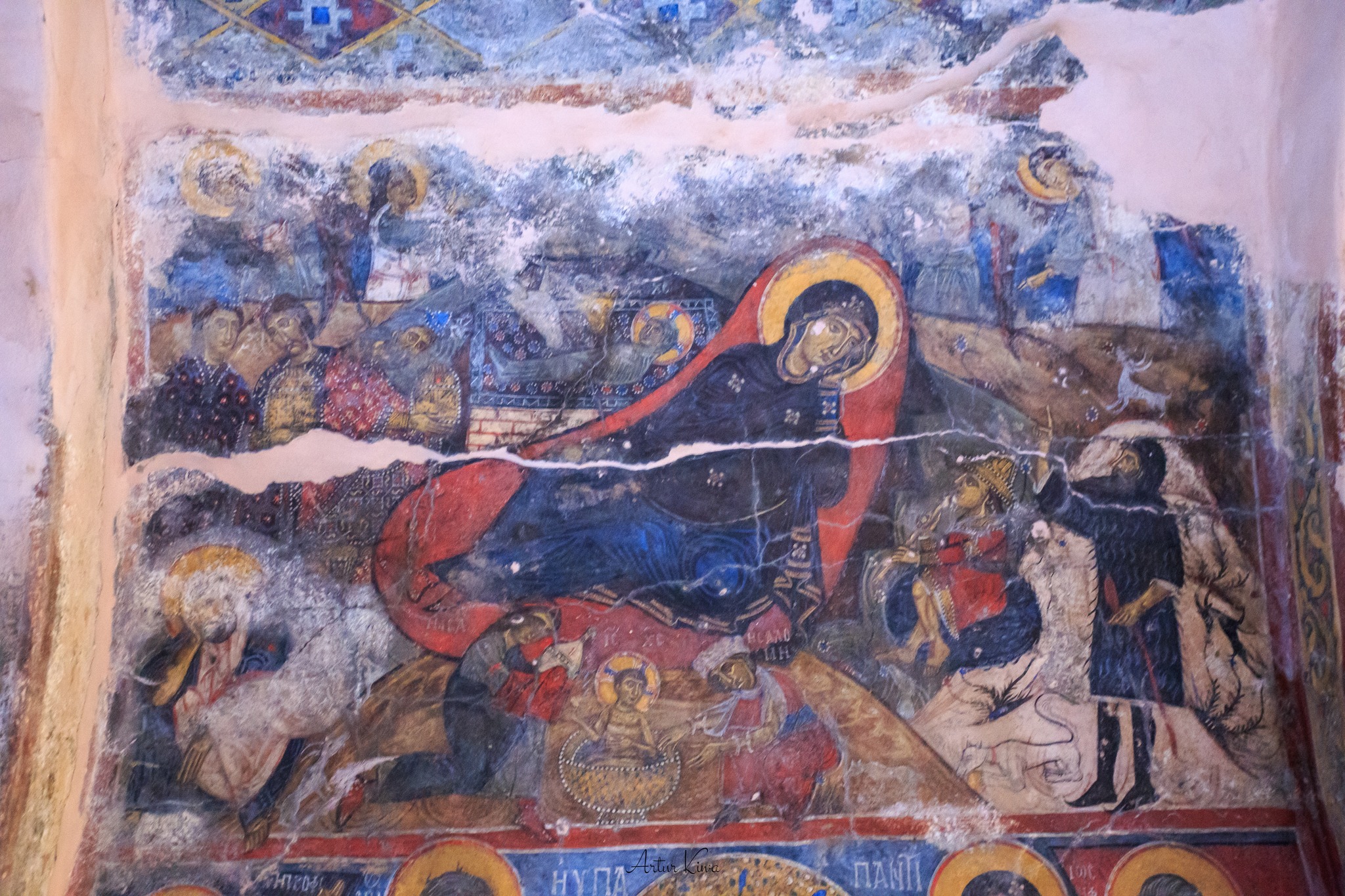
Recently someone called me out in public, suggesting that since Christmas is coming, I must be preparing “something seasonal”. So fine — if I’ve been pushed against the wall, here it is. Naturally, it will be done my way: frescoes, apocrypha, theology, and other “details”, depending on how charitably one sees it. Above all, it’s a look at how Cretans seven or eight centuries ago imagined the birth of Jesus, long before anyone decided a Nativity scene must resemble a Scandinavian holiday catalogue.
Let’s begin with two frescoes from the twelfth–thirteenth century, from two different churches, both as modest as they are fascinating. They contain everything that Nativity iconography is supposed to deliver: the Mother of God lying on her side, an infant who looks like a miniature adult, the ox and the donkey who — as always — are the first to recognize God, shepherds singing as if they were about to win Eurovision, and magi following the star, although the Bible stubbornly refuses to say how many they were. Tradition, however, likes order, and has settled for a trio for centuries: the old Caspar with gold, the mature Melchior with incense, the young Balthazar with myrrh. And only occasionally does someone ask where the “three” came from — and then things get awkward, because the Gospels are famously silent on the matter.
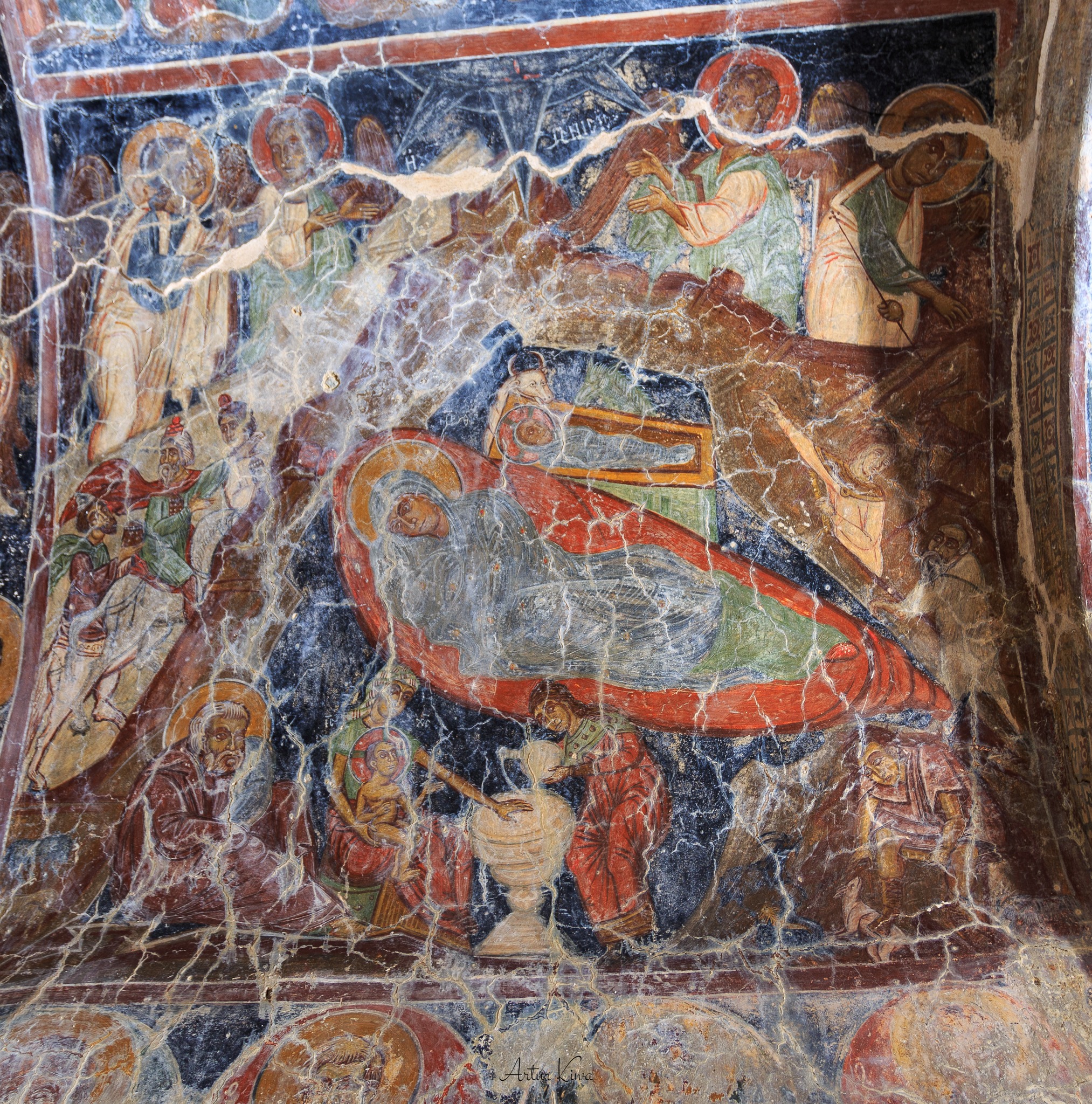
Speaking of silence, let’s look at Joseph. On Crete he is traditionally placed in a corner of the composition, often pensive and withdrawn, as if trying for the thousandth time to calculate what exactly has just happened. He is sometimes accompanied by an old man, who in iconography serves as the personification of the devil: the whisperer of doubts, the expert at suggesting to Joseph that “this can’t possibly be true”. As you can see, nothing much has changed in that field for two thousand years — humans need only a hint to start questioning everything.
Fine, but let’s get to the scene that raises eyebrows, causes confusion, and occasionally laughter. I mean that strange little vignette beneath the main Nativity: two women bending over a newborn, a basin of water, hands at work. “What on earth is that?” people ask. “The bathing of Jesus”, I reply, and then comes five seconds of absolute silence followed by a bewildered “wait, what?!”.
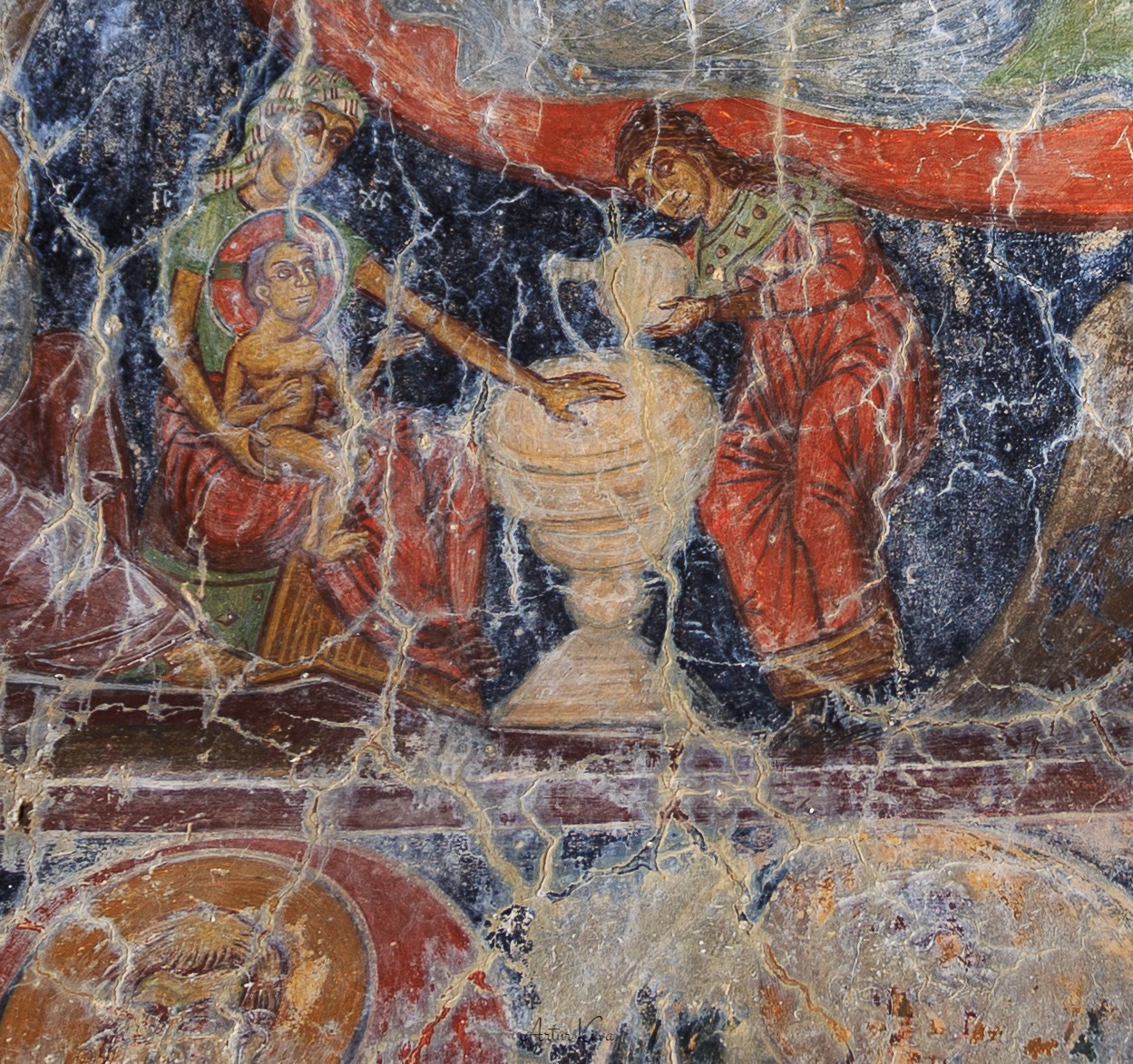
And yet it is a perfectly traditional scene, though taken from the Protoevangelium of James, one of the apocrypha known as the Infancy Gospels. It never made it into the official canon, but in frescoes — not only on Crete — the bathing scene appears regularly up through the late Middle Ages. The two women you see are the midwife (the anonymous one) and Salome, who at first doubts the virgin birth and then experiences healing because — well — doubting also has its rules. Amusingly, due to a misreading of the Greek abbreviation “ἡ μαῖα” (“the midwife”), Salome acquired a fictional companion named “Emea” — a character who never existed and was created entirely by mistaking a noun for a proper name.
The bathing scene disappeared from iconography when it was deemed “non-canonical”, but in Crete we have it preserved clearly — a vivid trace of the medieval imagination, which did not yet suffer from an obsession with doctrinal purity of imagery. Back then the message mattered more than the debate over whether an apocryphon was “allowed” in sacred painting.
And returning to the beginning: Cretan frescoes — though small, often squeezed into tiny naves where it’s hard even to stand upright — are capable of telling the story with theological precision.
The Nativity, in its original Byzantine form, is not a journalistic record of events; it is a theological synthesis.
The cave symbolizes the abyss; the manger recalls a sarcophagus; the ox and donkey fulfil Isaiah’s prophecy; and Mary’s posture reveals her role as the “New Eve”.
Cretan painters simply follow the canon but add their own softness and fluidity of line that is usually associated with Venetian influence.
And since we’ve reached East and West, it is worth remembering that the entire Venetian period on Crete was one long encounter between two theologies, two aesthetics, two views of Mary, Christ, angels, and biblical scenes. Venetian influence is visible in gentler facial modelling, softer shadows, and a more narrative style, yet the iconographic program remains firmly eastern. The magi may look like merchants from the Rialto, but they are still the Byzantine “magoi apo anatolon”, and the bathing of Jesus may smell of apocrypha, but it remains part of the early visual catechism.
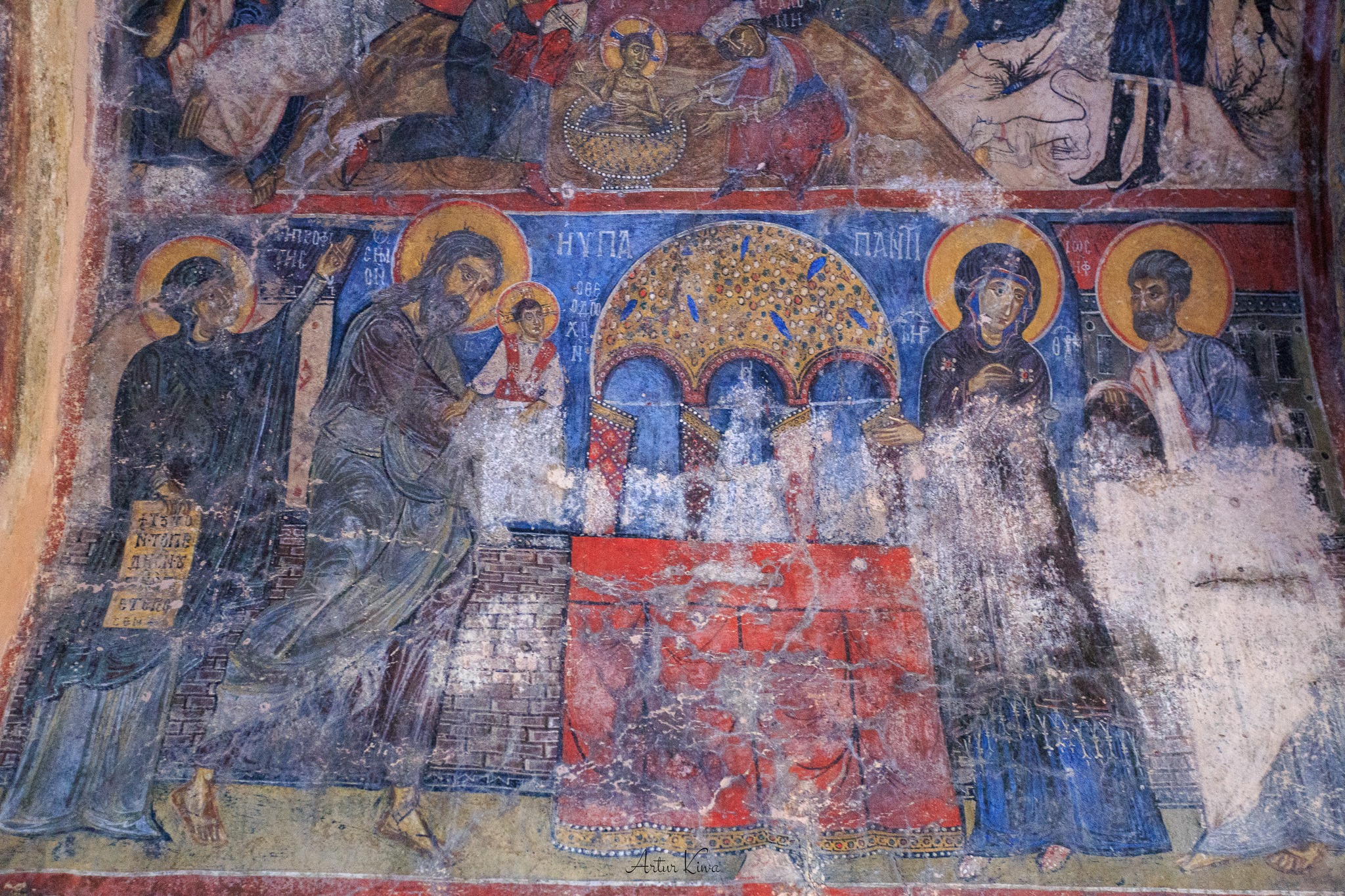
To conclude, here is a fresco of the Presentation in the Temple — no apocrypha, no controversy, no imaginary “Emeas”; just calm, traditional iconography that has never cared that the world around it keeps trying to modernize everything. And perhaps that is precisely why it feels so soothing.
In the meantime, I wish you peaceful holidays — without rush, without noise, with space to look, to wonder, and to discover in these old frescoes questions that today almost no one finds the time to ask.